
PAGE: Most Recent
Page Navigation: Most Recent , 1

ISSUE N036
Introduction
Can you Hear the Music?
You’ll hear equipment running, material moving, tools cycling, forklifts traveling, and people communicating. In a mature Lean operation, there’s another sound worth listening for: Andon music.
Calls for help. Signals identifying abnormalities. Team leaders responding. Support functions moving toward problems, protecting quality and preserving flow. To someone unfamiliar with Lean, that activity can sound like trouble.
ISSUE N035
Introduction
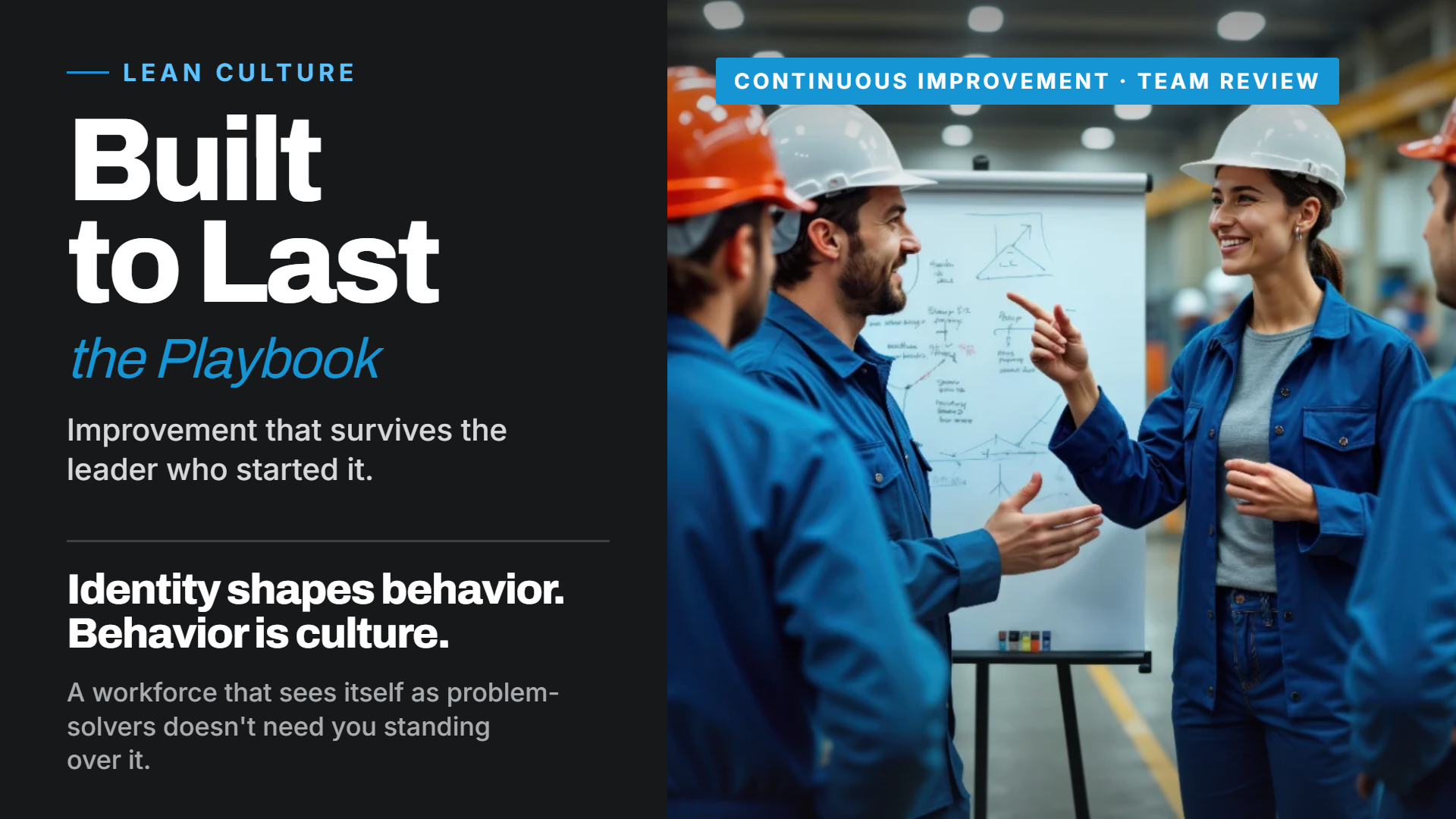
LEAN Culture - Built to Last Playbook
Walk into a plant a year after the transformation launched. You'll know in ten minutes whether anything they built survived.
The 5S boards are either living or they're wallpaper. The huddles are either where problems get solved or where people wait for the clock. The improvements you were so proud of are either the new floor everyone stands on, or a photo in an old kickoff deck.
That's the real test of a leader's legacy.
ISSUE N034
Introduction
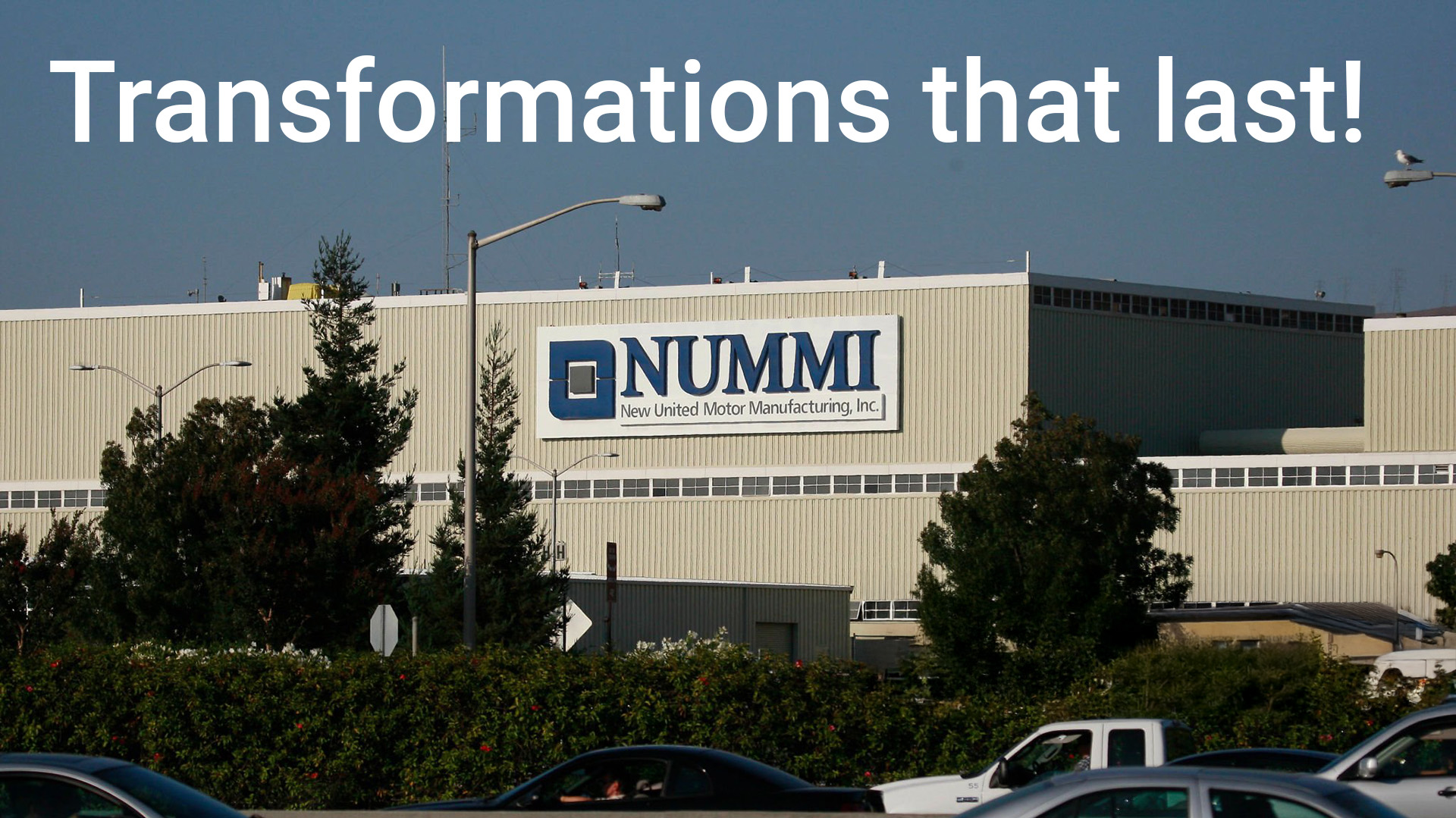
What NUMMI Taught Me About Making a Lean Transformation Last
In 1982, General Motors closed an assembly plant in Fremont, California, that almost everyone was glad to see go. Two years later, the same building reopened with the same workers and started building some of the highest-quality cars in North America. Nothing about the people had changed. Almost everything about the system had.

ISSUE N032
Introduction
In operations, leaders are constantly confronted with large, ambiguous problems.
“Our costs are too high.”
“Lead times are unacceptable.”
“Quality isn’t where it needs to be.”
“Productivity is lagging.”
These statements feel real.
They feel urgent.
They feel overwhelming.
And that’s the problem.
ISSUE N031
Introduction
Value Stream Mapping (VSM) is one of the most misunderstood tools in Lean Enterprise.
It is powerful.
It is strategic.
And it is routinely misapplied.
When used properly, VSM clarifies how value truly flows across an organization. When misused, it becomes an oversized process map that consumes time and delivers little impact.
ISSUE N030
Introduction
Benchmarking is one of the most powerful, and most misused, learning tools in Continuous Improvement. When done well, it accelerates understanding and prevents organizations from solving the same problems repeatedly. When done poorly, it produces excitement, photos, and very little change.
ISSUE N029
Introduction
Operations leaders in today’s manufacturing and healthcare environments are under constant pressure: high product variation, increased customization, tighter lead times, and workforce turnover that disrupts stability. In these settings, error proofing (poka-yoke) is no longer a “tool”, it’s a strategic capability. And the companies that master it consistently reduce rework, scrap, downtime, and risk, while building systems that perform regardless of variation.