What are QUICK TAKES?
Like many of you, we like to read. These are some of our favorite books. We jotted down some highlights, and we asked our AI team member to organize our thoughts. The name "book summary" is a stretch, so we named this work QUICK TAKES. Definitely some good reads on the list. There is a wide variety of general business books, LEAN books including some classics, as well as books on the power of story telling. Enjoy!
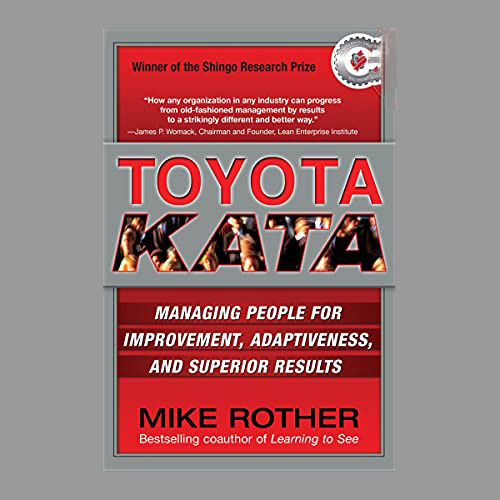
Toyota KATA by Mike Rother
Introduction:
"Toyota Kata" by Mike Rother is a significant work that delves into the managerial approaches and continuous improvement methodologies that have propelled Toyota to its status as one of the world's leading manufacturers. The term "kata" – borrowed from Japanese – refers to structured practices that one performs so they become second nature. Rother elucidates how Toyota has embedded continuous improvement and adaptation into its culture through two core katas – the Improvement Kata and the Coaching Kata. This book offers insights not just into the practices themselves but into fostering a culture that sustains continuous improvement and learning.
Understanding Toyota's Success:
Rother begins by dissecting the roots of Toyota's success. Unlike the traditional focus on tools and techniques that many attribute to Toyota's triumph, Rother suggests that the real secret lies in the underlying behavior patterns and thinking processes ingrained in the organization's culture. These patterns are what enable Toyota to consistently innovate and improve, setting a standard in the industry.
The Improvement Kata:
The Improvement Kata is a systematic, four-step approach that Toyota uses to tackle challenges and achieve objectives. It's a scientific method of sorts, applied to business processes. The steps include:
- Understanding the Direction or Challenge: This involves comprehensively understanding the long-term goals and the challenges that need to be overcome to reach them.
- Grasping the Current Condition: This step focuses on deeply understanding the current state of operations to identify the gap between the current reality and the desired state.
- Establishing the Next Target Condition: This involves setting a short-term goal that moves the organization closer to its long-term objectives. The target condition is a detailed and specific description of how a particular process should operate once improvements are made.
- Experimenting Toward the Target Condition: This step involves iterative experimentation, where various hypotheses are tested to overcome obstacles and learn the best path forward toward the target condition.
The Coaching Kata:
The Coaching Kata complements the Improvement Kata. It is a pattern of teaching the Improvement Kata thinking and processes to others, thus embedding continuous improvement into the organization's DNA. The coaching process is structured and iterative, involving the following steps:
- The learner presents the current understanding of the target condition and the next step they plan to take.
- The coach reviews the learner's understanding, asking probing questions to ensure clarity and deep understanding.
- The learner carries out the next step, gathering data and learning from the outcome.
- The coach and learner review the results together, deriving insights and planning the next steps.
Cultural Transformation:
Rother emphasizes that the real power of the Improvement and Coaching Katas lies in their ability to instill a mindset of continuous improvement and learning within the organization. By repeatedly practicing these katas, employees at all levels internalize a way of thinking that is focused on constant learning and adaptation.
Application Beyond Toyota:
While "Toyota Kata" is grounded in the experiences of Toyota, Rother makes a compelling case for the application of these katas across various industries and organizations. The principles of the Improvement and Coaching Katas are universal, focusing on problem-solving, learning, and people development, which are relevant to any organization striving for excellence and continuous improvement.
Challenges and Considerations:
Implementing the Toyota Kata in an organization that is not accustomed to this way of thinking and acting can be challenging. It requires a shift in mindset at all levels of the organization, particularly among leadership. Leaders must transition from being solution-givers to coaches who facilitate problem-solving and learning among their teams.
Conclusion:
"Toyota Kata" provides a profound insight into the core principles that drive continuous improvement and learning within Toyota. By delineating the Improvement and Coaching Katas, Mike Rother offers a blueprint for embedding these practices into any organization's culture. The book is not just a guide to processes but a call to foster a mindset of ongoing learning and adaptation, which is crucial for success in today's dynamic business environment.
Reflection:
"Toyota Kata" is more than a business book; it's a philosophical guide to organizational and personal improvement. Rother's detailed explanation of the katas, combined with practical examples, makes the book an invaluable resource for anyone looking to foster a culture of continuous improvement in their organization. The principles laid out in the book challenge conventional wisdom and provide a structured approach to nurturing the kind of problem-solving and adaptive skills that are essential in the modern business landscape.