What are QUICK TAKES?
Like many of you, we like to read. These are some of our favorite books. We jotted down some highlights, and we asked our AI team member to organize our thoughts. The name "book summary" is a stretch, so we named this work QUICK TAKES. Definitely some good reads on the list. There is a wide variety of general business books, LEAN books including some classics, as well as books on the power of story telling. Enjoy!
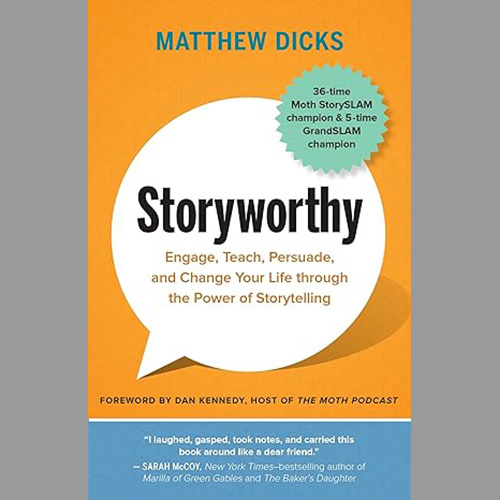
Storyworthy by Matthew Dicks
Introduction: The Universal Love for a Good Story
Stories form the backbone of human connection, transcending the boundaries of time and space, captivating us whether we're encircled around a flickering campfire or seated around a sleek boardroom table. The magic of a well-told story lies in its ability to etch itself into our memory, but what exactly makes a narrative not just good, but unforgettable? Contrary to what some might believe, storytelling isn't a gift bestowed upon a chosen few; it's an art that anyone can master. Each of us harbors a treasure trove of experiences ripe for storytelling; we merely need the correct tools to unearth and shape these gems.
Join us on an enlightening journey with Matthew Dicks, a bestselling novelist and a seasoned storyteller, as he guides us through the intricacies of transforming ordinary life experiences into captivating tales. This exploration will delve into the core elements of storytelling, examining the dos and don'ts that can either captivate your audience or leave them disengaged.
The Core Elements of a Memorable Story
Change: The Heartbeat of a Great Story
Matthew Dicks champions the notion that at the core of every compelling story is change. This isn't about grandiose transformations or epic adventures; even the most subtle shifts can serve as the foundation for a gripping narrative. Stories that merely recount events without showcasing change fall flat, failing to resonate or leave a lasting impact on the listener. They become mere anecdotes, lacking the depth and growth that true stories possess. When you recount a narrative, ensure it reflects a journey, not just a series of events.
The Protagonist's Role: Being the Center of Your Story
An effective story also demands authenticity, which is best achieved when the storyteller themselves is at the epicenter of the narrative. When you share your own experiences, there's an inherent vulnerability and immediacy that captivates audiences, making your narrative more relatable and impactful. While sharing others' stories is not off-limits, the key is to narrate them through your lens, connecting their experiences to your personal journey.
Crafting Your Story: Techniques and Strategies
To elevate a story from merely good to truly unforgettable, Dicks introduces a set of practical storytelling techniques rooted in structure, tension, and emotional resonance. He encourages storytellers to identify the “Elephant”, the central question or problem driving the narrative, and pack the emotional “Backpack” by revealing personal stakes early on. Story pacing is managed through tools like “Breadcrumbs” (teasing future developments), “The Hourglass” (slowing time to build tension), and “The Crystal Ball” (suggesting false outcomes to mislead and engage the audience). Rather than stringing events together with “and,” Dicks suggests using “but” and “therefore” to maintain cause-and-effect logic, which sharpens the arc of transformation. These techniques ensure stories aren’t just recounted, they’re crafted to create emotional payoff, hold attention, and leave the audience changed, just like the protagonist.
The Dinner Test: Ensuring Relatability
Dicks introduces the 'dinner test' as a benchmark for a story's appeal. If your narrative wouldn't hold up during a casual dinner conversation, it might need reworking. This test underscores the importance of authenticity over theatricality. Your story should feel natural, devoid of forced dramatics or poetic embellishments that can alienate listeners. The essence of storytelling lies in sharing, not performing.
Embracing the Present Tense
A story told in the present tense invites listeners into the moment, creating an immersive experience. This technique can transport your audience, making them feel as though they're living the story alongside you, enhancing the emotional connection and impact of your narrative.
The Art of Beginning and Ending: Identifying the Climactic Moment
Every story should build toward a climactic moment, a point of significant change or realization. Once identified, this moment not only dictates the story's end but also illuminates where the narrative should commence. Crafting a story is akin to piecing together a puzzle, where understanding the final image guides the placement of the initial piece.
Crafting the Narrative Arc
The beginning of your story should starkly contrast with its ending, creating a narrative arc that demonstrates the journey of change. This structure not only satisfies the listener's desire for resolution but also highlights the story's underlying message and emotional journey.
The Dos and Don'ts of Engaging Your Audience
Immersion Over Interrogation
While storytelling, avoid rhetorical questions or addressing the audience directly. These tactics can break the narrative's spell, pulling listeners out of the story's world and back into their reality. The goal is to maintain the illusion, keeping the audience fully immersed in the narrative.
Language: The Storyteller's Tool
Words wield power, and in storytelling, the choice of language can significantly influence the listener's perception. Dicks advises against using profanity or vulgarity, not out of prudishness, but to maintain universal appeal and respect. A well-told story doesn't need shock value to resonate; it relies on the strength of its narrative and the authenticity of its voice.
Conclusion: The Journey of Storytelling
Mastering storytelling is a journey, one that requires understanding the intrinsic elements that make a narrative resonate. Through Matthew Dicks' guidance, we learn that storytelling is an art that thrives on authenticity, change, and the ability to connect with our audience on a profound level. Whether you're sharing a piece of your life, recounting a moment of transformation, or simply bringing listeners along on a journey, the essence of storytelling remains the same: to share, to connect, and to engage, leaving a lasting imprint on the hearts and minds of your audience.