What are QUICK TAKES?
Like many of you, we like to read. These are some of our favorite books. We jotted down some highlights, and we asked our AI team member to organize our thoughts. The name "book summary" is a stretch, so we named this work QUICK TAKES. Definitely some good reads on the list. There is a wide variety of general business books, LEAN books including some classics, as well as books on the power of story telling. Enjoy!
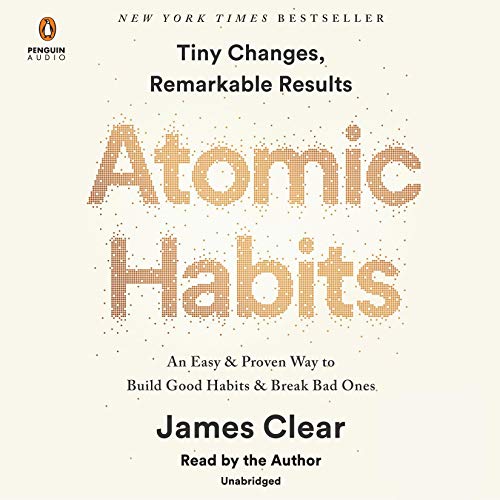
Atomic Habits by James Clear
Introduction
In "Atomic Habits," James Clear presents a groundbreaking framework for understanding how habits shape our lives and how we can harness them to achieve our goals and realize our full potential. Clear's thesis is simple yet profound: tiny changes, when compounded over time, can lead to remarkable results. By focusing on the small, incremental adjustments we can make in our daily routines, Clear argues that we can fundamentally transform our lives, one habit at a time.
The Fundamentals of Habits
Clear begins by defining a habit as an automatic response to a specific situation, developed through repeated exposure and practice. He distinguishes between good habits, which propel us towards success, and bad habits, which deter us from our goals. The book's core premise is that by understanding the mechanics of habit formation, we can break down the process of building good habits and dismantling bad ones into manageable steps.
The Four Laws of Behavior Change
Central to Clear's methodology are the Four Laws of Behavior Change, a set of principles that guide the formation of good habits and the elimination of bad ones:
-
Make It Obvious: Clear emphasizes the importance of cues in habit formation. By making the cues for good habits obvious, we can increase the likelihood of engaging in those habits. This involves designing our environment to make the triggers for desired behaviors more visible and accessible.
-
Make It Attractive: The more appealing a habit is, the more likely we are to engage in it. Clear suggests bundling habits—pairing a habit you need to do with one you want to do—to make the process more enjoyable and enticing.
-
Make It Easy: The easier a habit is to perform, the more likely it is to stick. Clear advocates for reducing friction associated with good habits and increasing it for bad habits. This can involve breaking down complex behaviors into simpler, more manageable tasks or reorganizing our environment to facilitate better habits.
-
Make It Satisfying: We're more likely to repeat a behavior when it's immediately rewarding. Clear recommends using reinforcement to ensure that good habits provide tangible, immediate benefits, making them more satisfying and, thus, more sustainable.
The Role of Identity in Habit Formation
A novel aspect of Clear's approach is the emphasis on identity in habit formation. He argues that lasting change starts with a shift in self-image. When we adopt habits that reflect the person we want to become, we're not just changing our behavior; we're changing our sense of who we are. This alignment between identity and action provides a powerful motivation for maintaining our habits, as they become expressions of our self-concept rather than externally imposed tasks.
Practical Strategies for Habit Implementation
Throughout the book, Clear offers practical strategies and real-life examples to illustrate how his principles can be applied. He provides readers with tools to assess their habits, identify areas for improvement, and develop plans for change. He also addresses common challenges in habit formation, such as dealing with setbacks, navigating complex behavioral changes, and sustaining motivation over the long term.
The Compounding Effect of Atomic Habits
One of the most compelling arguments in the book is the concept of compound growth in the context of habits. Clear illustrates how small, seemingly insignificant changes can accumulate over time to produce dramatic results. This principle of compounding underscores the value of consistency and persistence in habit formation, highlighting that even the smallest actions, when repeated consistently, can have a profound impact on our lives.
Case Studies and Research
Clear supports his arguments with a wealth of case studies from various domains, including business, athletics, healthcare, and personal development. He also draws on research from psychology, neuroscience, and behavioral economics to provide a solid scientific foundation for his recommendations. These examples not only demonstrate the applicability of Clear's principles across different contexts but also inspire readers with stories of individuals and organizations that have successfully implemented atomic habits to achieve their goals.
Critique and Comparison
While Clear's ideas are largely aligned with contemporary research on habit formation, the book also engages with other perspectives in the field, providing a comprehensive overview of the topic. Clear acknowledges the work of other experts, such as Charles Duhigg and Nir Eyal, comparing and contrasting their approaches with his own. This engagement with the broader literature on habits adds depth to Clear's arguments and situates his work within the larger conversation on behavior change.
Conclusion: Empowering Change Through Atomic Habits
In conclusion, "Atomic Habits" offers a powerful and practical guide to understanding and leveraging the power of habits in our lives. By breaking down the process of habit formation into clear, actionable steps, Clear empowers readers to take control of their behaviors and, by extension, their lives. Whether seeking to improve health, increase productivity, or achieve any other goal, readers will find valuable insights and strategies in Clear's work that can be applied to make lasting, positive changes.
Through its accessible writing, robust evidence base, and actionable advice, "Atomic Habits" stands out as a significant contribution to the field of self-improvement and behavior change, offering readers a roadmap to a more successful and fulfilling life, one small habit at a time.