What are QUICK TAKES?
Like many of you, we like to read. These are some of our favorite books. We jotted down some highlights, and we asked our AI team member to organize our thoughts. The name "book summary" is a stretch, so we named this work QUICK TAKES. Definitely some good reads on the list. There is a wide variety of general business books, LEAN books including some classics, as well as books on the power of story telling. Enjoy!
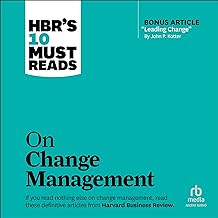
HBR's 10 Must Read on Change Management
Introduction
"HBR's 10 Must Reads on Change Management" is a collection of the most insightful and impactful articles from Harvard Business Review that explore various dimensions of change management. This compilation is designed to help leaders and managers navigate and lead change in increasingly complex and volatile business environments. It features thought leaders like John Kotter, W. Chan Kim, and Renée Mauborgne, who provide actionable insights and strategies to effectively manage and sustain change.
Overview
The book is divided into ten articles, each focusing on different aspects of change management, from initiating change and overcoming resistance to ensuring that change is sustainable. This summary will delve into each article, highlighting the key messages and practical advice provided by the authors.
1. Leading Change: Why Transformation Efforts Fail by John P. Kotter
In this seminal article, Kotter introduces an eight-step process for leading change, which has become a foundational framework in the field of change management. The steps include establishing a sense of urgency, creating a guiding coalition, developing a vision and strategy, communicating the change vision, empowering employees for broad-based action, generating short-term wins, consolidating gains and producing more change, and anchoring new approaches in the culture. Kotter emphasizes the common mistakes leaders make, such as underestimating the power of inertia and failing to anchor changes in the corporate culture.
2. Change Through Persuasion by David A. Garvin and Michael A. Roberto
Garvin and Roberto discuss the importance of persuasive communication in the context of change. They suggest a four-step process to effectively persuade others when leading change: preparing the ground, crafting the message, managing moods and emotions, and reinforcing changes. The authors stress the need for leaders to be transparent, to build trust, and to create compelling narratives that motivate employees.
3. Leading Change When Business Is Good: An Interview with Samuel J. Palmisano
This article presents insights from Samuel J. Palmisano, former CEO of IBM, on how to implement change not out of desperation but from a position of strength. Palmisano describes how preemptive change can be used as a strategy to innovate and stay ahead of the competition. He emphasizes the importance of aligning organizational structure with strategy and integrating global resources effectively.
4. Radical Change, the Quiet Way by Debra E. Meyerson
Meyerson introduces the concept of "tempered radicals," people who induce change incrementally from within the organization without clashing with the corporate culture. She advocates for subtle approaches, such as small wins and alliance building, which can lead to significant changes over time. Meyerson encourages change agents to maintain their beliefs and values while being flexible in their strategies.
5. Tipping Point Leadership by W. Chan Kim and Renée Mauborgne
In this article, Kim and Mauborgne introduce "tipping point leadership," a concept that focuses on identifying and leveraging factors that can lead to rapid and profound change with minimal resources. The authors discuss overcoming cognitive, resource, motivational, and political hurdles that typically impede change. They use the New York Police Department's turnaround under William Bratton as a case study.
6. A Survival Guide for Leaders by Ronald A. Heifetz and Marty Linsky
Heifetz and Linsky explore the personal challenges leaders face during change initiatives, including managing politics, dealing with personal attacks, and handling the stress associated with leadership roles. They provide strategies for leaders to stay resilient, to protect themselves, and to manage their vulnerabilities effectively during turbulent times.
7. The Real Reason People Won’t Change by Robert Kegan and Lisa Laskow Lahey
Kegan and Lahey delve into the psychological barriers to change, particularly the hidden commitments that conflict with organizational goals. They introduce a method for uncovering these underlying resistances and suggest ways to align employees’ personal goals with organizational change initiatives.
8. Cracking the Code of Change by Michael Beer and Nitin Nohria
Beer and Nohria analyze two theories of corporate transformation—Theory E, which is change based on economic value, and Theory O, which focuses on developing organizational capabilities. They argue that the most effective change programs integrate both theories, balancing the need for economic success with the need to build a healthy corporate culture.
9. The Hard Side of Change Management by Harold L. Sirkin, Perry Keenan, and Alan Jackson This article focuses on the tangible elements of change management, introducing a practical framework (DICE: Duration, Integrity, Commitment, and Effort) to predict the success of change initiatives. The authors discuss how to manage and measure these factors to improve the likelihood of successful change implementation.
10. Why Change Programs Don’t Produce Change by Michael Beer, Russell A. Eisenstat, and Bert Spector
Beer, Eisenstat, and Spector critique superficial or poorly implemented change programs that fail to achieve lasting results. They suggest an alternative approach that focuses on fostering commitment among employees, aligning management behavior with change goals, and developing an organizational capability for ongoing change.
Conclusion
"HBR's 10 Must Reads on Change Management" offers a rich tapestry of ideas, strategies, and practical advice for managing change effectively. It underscores the complex and multifaceted nature of change management and provides leaders with the tools and knowledge to lead change initiatives successfully. Whether dealing with incremental change or radical transformations, the insights from these articles are invaluable for anyone looking to lead their organization through change effectively.