What are QUICK TAKES?
Like many of you, we like to read. These are some of our favorite books. We jotted down some highlights, and we asked our AI team member to organize our thoughts. The name "book summary" is a stretch, so we named this work QUICK TAKES. Definitely some good reads on the list. There is a wide variety of general business books, LEAN books including some classics, as well as books on the power of story telling. Enjoy!
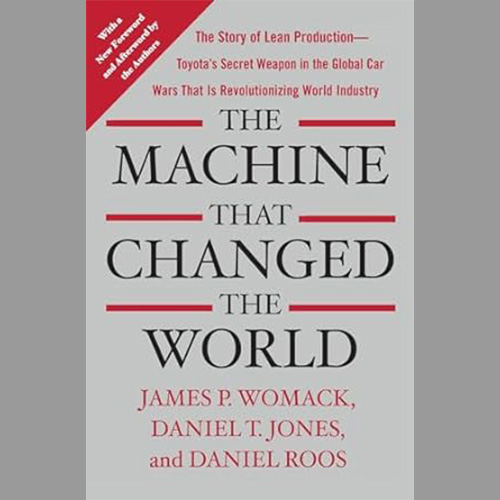
The Machine that Changed the World by James P. Womack
Introduction
"The Machine That Changed the World," written by James P. Womack, Daniel T. Jones, and Daniel Roos, provides an in-depth analysis of the automotive industry, comparing the mass production methods of the West with the lean production techniques of the Japanese. Originating from a five-year, five-million-dollar study on the future of the automobile conducted by the Massachusetts Institute of Technology (MIT), this book offers a revolutionary perspective on the car manufacturing industry and its global implications.
The Genesis of Automobile Manufacturing:
The book begins by detailing the origins of automobile manufacturing, highlighting the transition from craft production to mass production. Craft production, characterized by skilled artisans handcrafting cars with customized parts, was the initial method of car manufacturing. However, this approach was inherently limited in scale and efficiency.
The Rise of Mass Production:
The narrative then shifts to the advent of mass production, epitomized by Henry Ford's assembly line. This innovation drastically increased production efficiency, reduced costs, and made cars affordable to the general public. Mass production became the gold standard for manufacturing, not just in the automotive industry but across various sectors.
The Lean Production Revolution:
The core of the book is its exploration of lean production, a revolutionary approach pioneered by the Japanese, particularly Toyota. Lean production, as opposed to mass production, focuses on minimizing waste, enhancing product quality, reducing production time and costs, and increasing overall efficiency. The authors illustrate how lean production utilizes less of everything compared to mass production—less human effort, less manufacturing space, less investment in tools, and less engineering time to develop a new product.
Key Principles of Lean Production:
The book delves into the key principles of lean production, which include:
- Perfect First-Time Quality: Aiming for zero defects, thus eliminating costly rework.
- Waste Minimization: Removing any activity that does not add value to the product.
- Continuous Improvement: Pursuing incremental and innovative improvements in all processes.
- Flexibility: Being able to produce a variety of products efficiently in small volumes.
- Long-Term Relationships: Building strong partnerships with suppliers and fostering teamwork among employees.
Comparative Analysis:
"The Machine That Changed the World" presents a comparative analysis of the mass production and lean production systems. It shows how lean production has led to superior performance in terms of production efficiency, quality, and responsiveness to market demands. The book also discusses the challenges Western manufacturers faced when trying to adopt lean production principles.
Global Impact and Future Trends:
The authors extend their analysis to the global impact of lean production, predicting how it would reshape manufacturing worldwide. They foresee a future where lean production principles become ubiquitous across industries, driving innovation and efficiency.
Implementation Challenges:
The book also addresses the challenges of implementing lean production, particularly in cultures accustomed to the mass production mindset. It emphasizes the need for a holistic approach, where lean principles are ingrained in every aspect of the organization, from the shop floor to the executive suite.
Conclusion:
"The Machine That Changed the World" is more than just a historical account of automotive manufacturing. It is a blueprint for industrial efficiency and innovation. The authors convincingly argue that lean production is not just a manufacturing methodology but a strategic philosophy that can transform organizations. As industries worldwide continue to evolve, the principles outlined in this book remain relevant, offering valuable insights for businesses aiming to thrive in a competitive global market.
Reflection:
While the book is fundamentally about the automotive industry, its lessons extend far beyond. It's a must-read for business leaders, managers, and anyone interested in the principles of efficiency and innovation in the manufacturing process. The transformation from mass to lean production detailed in the book serves as a powerful metaphor for organizational change and adaptation in the face of shifting market dynamics.
In conclusion, "The Machine That Changed the World" is a seminal work that offers profound insights into the evolution of manufacturing and its implications for the future. Its analysis of lean production not only provides a roadmap for industrial efficiency but also champions a philosophy of continuous improvement that is applicable across various domains of business and industry.