
ISSUE N021
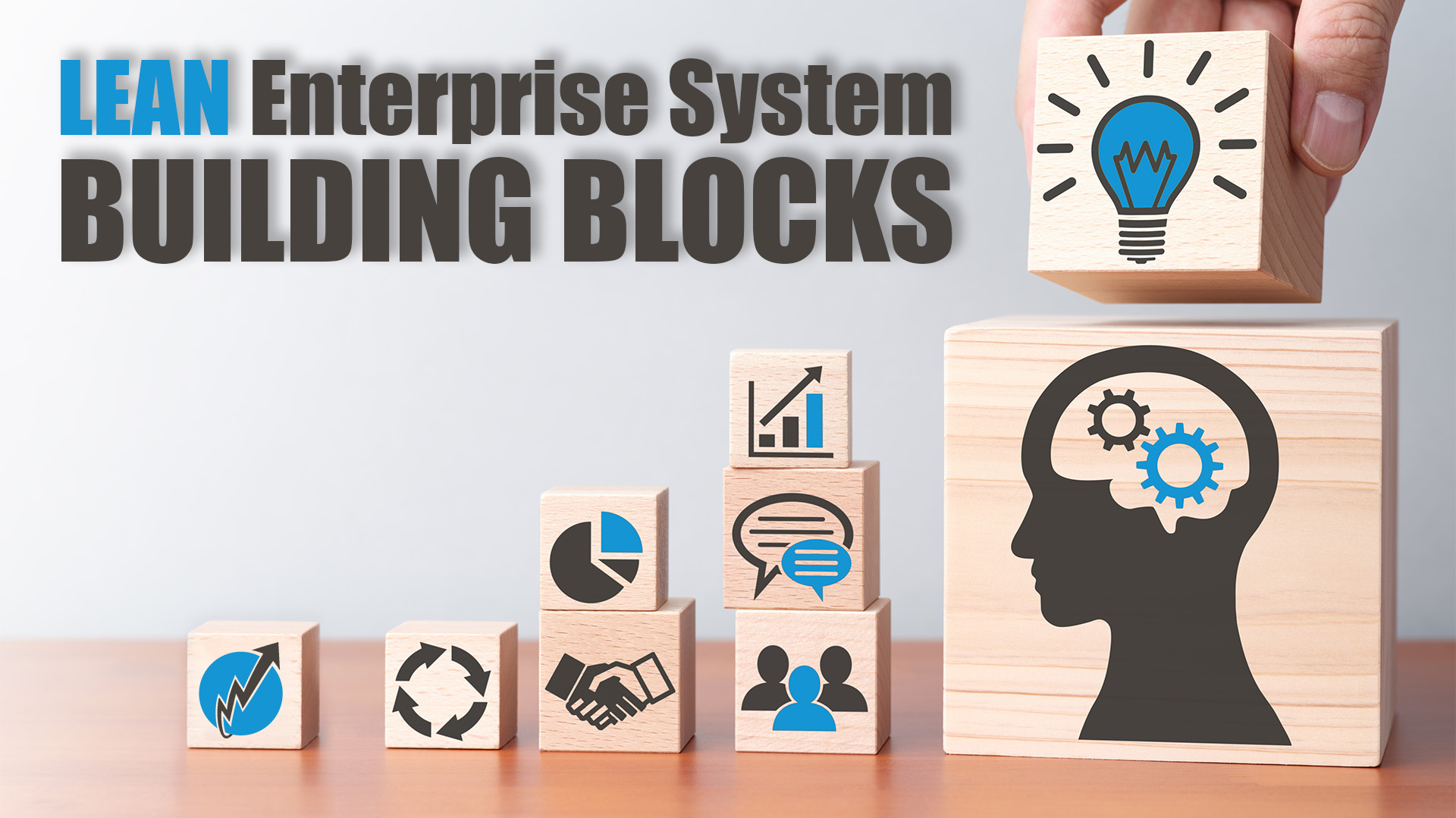
LEAN Enterprise System (LES) Building Blocks
Introduction
To build a LES, we must understand why we need it, what it is, and how it fits in with existing business processes that deliver products or services.
Definition: A LEAN Enterprise System delivers a quality product or service, as defined by the customer, in the shortest possible time with the least possible resources.
________________________________________
30,000 Foot View
The basic structure of LES is represented by LEAN methodology which consists of the following components/steps:
Identify Value:
The customer determines the value of a product or service. A lean organization delivers that value as efficiently as possible.
Map the Process:
The labor, equipment, materials, and information required to create the product or service are analyzed and organized as efficiently as possible.
Create Flow:
The process configuration is refined to eliminate waste and improve the flow of the product or service.
Establish a Pull System:
A Pull System ties the product or service creation pace to customer demand and ensures that the right products or services are delivered at the right time in the right quantity.
Pursue Perfection:
Customer feedback and internal metrics are monitored to facilitate continuous improvement of products or services.
Sounds awesome. Let’s get started immediately by implementing this methodology.
The Challenge. What do these components/steps look like specifically within a company structure? How do these components integrate with existing business processes? How do we build the system for longevity as the inevitable changes in management occur across the organization? What are the enablers for these components to work?
________________________________________
Building a system for growth and longevity
Most companies that have been around for more than a few years can find evidence of false starts of LEAN initiatives. False starts can usually be attributed to failure to build a strong foundation and focusing more on tools than process. What are the essential process building blocks of a LEAN Enterprise System that will last?
Culture
Focusing on culture is imperative in implementing and sustaining a Lean Enterprise System. Develop an “operations manual” that defines the following:
- “Inverted triangle” Management Philosophy
- Customer Focused Philosophy
- Team Concept and Help Chain Definition and Structure
- Roles and Responsibilities - Every employee is a problem solver.
Standardization
Defined process that describes a clean, well-organized workplace with documented standard work, clear performance targets, and well-designed visual management. Major components include:
- Standard Work
- Workplace Organization
People Involvement
The most qualified people work safely and efficiently to deliver products and services. Major components include:
- Health and Safety
- Communications
- Engagement
Short Lead Time
Defined process that describes how the product or service flows from the beginning of the value stream until it reaches the customer: Right product or service, right time, and right quantity. Major components include:
- Scheduling
- Single Piece Flow concepts
- Kanban/Pull Systems
- Storage and Delivery concepts
Built-In Quality
Defined process that prioritizes product or service “first-time quality”. Major components include:
- Validation
- Standards
- Measurement and Feedback
Continuous Improvement
A defined process that continually improves using the PDCA cycle. Major components include:
- Business Planning and Implementation
- Problem Solving Methods and Techniques
- LEAN design of process and facilities
________________________________________
In summary, LES is based on LEAN Methodology and it expands these concepts into a broad-based, well-documented system built on a culture of continuous improvement. Companies that have implemented this system with a focus on culture have demonstrated superior business results through both the peaks and valleys of the economic cycle.
RELATED COURSES
RECENT